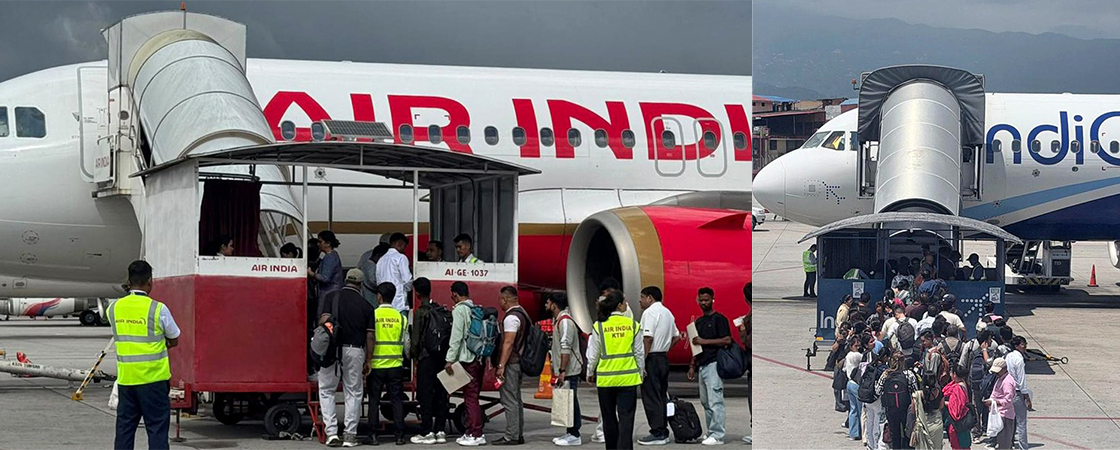
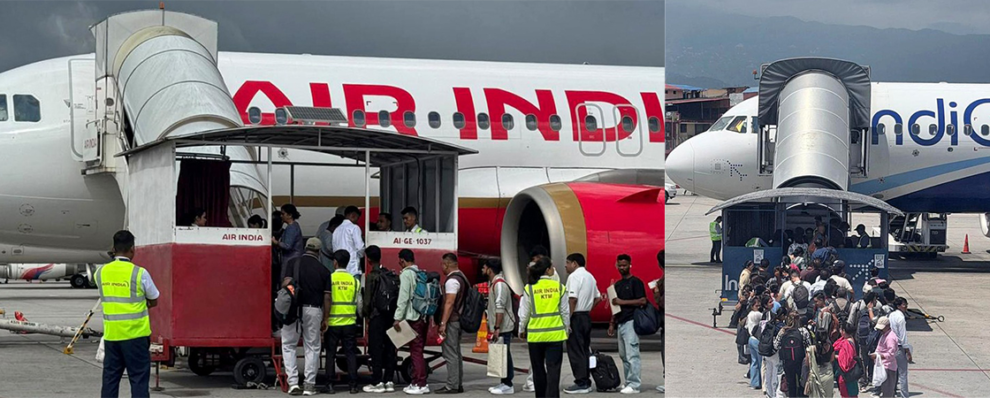
Kathmandu—The issue of Indian personnel conducting additional security checks on passengers of Indian airlines—even after they have already cleared Nepali security screening at Tribhuvan International Airport (Nepal’s sole major international airport)—has resurfaced after 26 years. A long-standing arrangement requires passengers bound for India on Indian carriers to undergo a secondary check of their persons and hand luggage by Indian staff on the airport apron after clearing Nepali security.
However, a critical question remains: where is the original decision or agreement authorizing foreign security personnel to conduct additional security checks on passengers at a Nepali airport? No clear documentation regarding the original approval for this arrangement has been found with the Ministry of Culture, Tourism and Civil Aviation; the Civil Aviation Authority of Nepal; or the Ministry of Home Affairs. Officials from all three agencies merely refer the matter to one another when asked about the relevant documents. How the Security Checks Began
India raised serious concerns regarding security arrangements at Kathmandu Airport following the hijacking of Indian Airlines flight IC-814 (en route from Kathmandu to Delhi) in December 1999. Indian Airlines flights to Kathmandu were suspended for approximately five months. When operations were set to resume, the Indian side demanded additional security measures.
Reports indicate that when Indian Airlines resumed services to Kathmandu on June 1, 2000, a system was implemented requiring passengers bound for Indian destinations to undergo an additional security check by Indian personnel on the airport apron, following the initial Nepali security screening. Although this arrangement was initially described as temporary, it remains in place to this day. According to an official from the Civil Aviation Authority of Nepal, Indian personnel are deployed at Tribhuvan Airport.
It is reported that among the staff deployed for a flight, specific Indian personnel are involved in searching passengers and their hand luggage in the apron area. It is claimed that while Nepali staff provide assistance, the primary screening is conducted by the Indian personnel.
This raises a natural question: Does the authority to conduct the final security screening of passengers at a Nepali airport belong to the Nepali security apparatus or to a foreign entity?
This is the most critical aspect of the matter. If the Indian side has been granted permission to enter the sensitive areas of the Nepali airport and screen passengers, there ought to be a legal basis, a government decision, an agreement, or a standard operating procedure (SOP) to authorize it. However, the relevant government agency is unable to produce such a primary document.
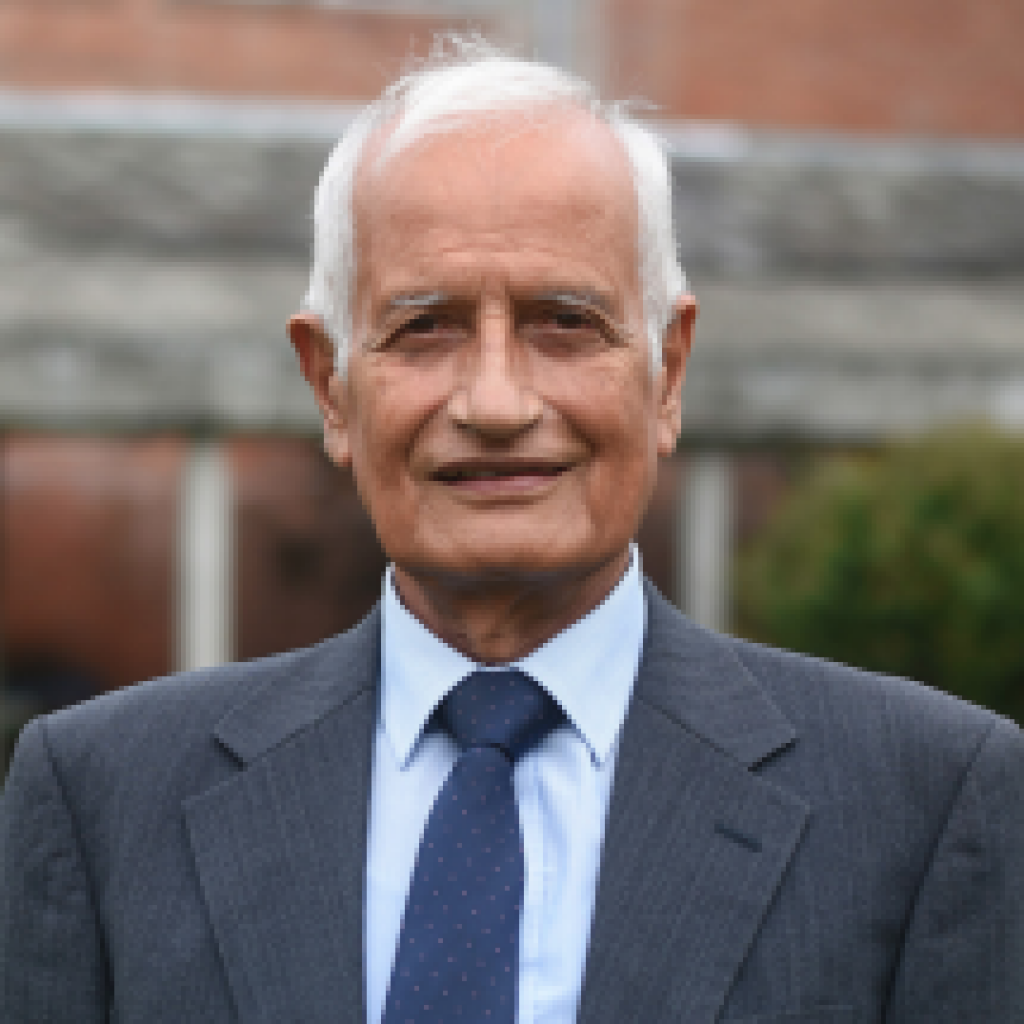
Government officials suggest that the then-Minister for Tourism, Hisila Yami, may have made a decision in 2009 regarding the installation of Indian security equipment at the airport. However, the ministry has not even [been able to produce] the file containing that decision… …reportedly could not be found. Yami, however, stated that her decision was not about deploying Indian ‘Sky Marshals’ but rather about installing X-ray equipment at the airport itself.
Did no government review this for 26 years?
Dozens of governments were formed in Nepal during this period. Regimes changed; prime ministers changed; and ministers of tourism and home affairs changed. Yet, the additional Indian security screening for passengers of Indian airlines at the airport remained in place. Even though Nepal’s major political parties held power, there appears to have been no public review of this arrangement or any initiative to remove it. Consequently, the question now arises: does this arrangement persist because it is still necessary, or simply because no one has questioned it for 26 years?
One airport, different security arrangements
Passengers flying internationally on other airlines from Tribhuvan Airport board their flights after passing through Nepali security checks. Even when Nepal Airlines operates flights to Delhi, Mumbai, and Bengaluru in India, passengers do not undergo the kind of additional Indian security screening that passengers of Indian airlines face. Other international airlines—such as Qatar Airways and Turkish Airlines—are not subject to such permanent foreign security screening arrangements either.
Why is this arrangement in place only for Indian airlines?
Will the government—led by Prime Minister Balendra Shah—review this 26-year-old arrangement? If India’s security concerns persist, what is the clear basis for them? If Nepal’s airport security system is inadequate, what is the government doing to improve it? And if Nepal’s security system is adequate, why is the arrangement allowing foreign security personnel to re-examine passengers at a Nepali airport still in place? …station them? Demands are also being raised for the government to engage in diplomatic dialogue with India and make public the clear legal and security grounds for this move.
What if China makes a similar demand in the future?
This incident raises another hypothetical yet significant question. What if, tomorrow, a Chinese airline were to say, “The safety of our passengers is a sensitive matter; after the Nepali security check, our own Chinese security personnel will also conduct a secondary security screening of our passengers”? How would the Government of Nepal respond then? If permission has been granted to India, why not to China? If it cannot be granted to China, why is it permissible for India? What would Nepal’s policy be if airlines from the US, Europe, or other nations were to demand the deployment of their own security personnel as well?
Is every country to be allowed to establish its own security perimeter at Tribhuvan Airport? Or will the ultimate authority for passenger security screening within the airport remain with the Nepali state?