
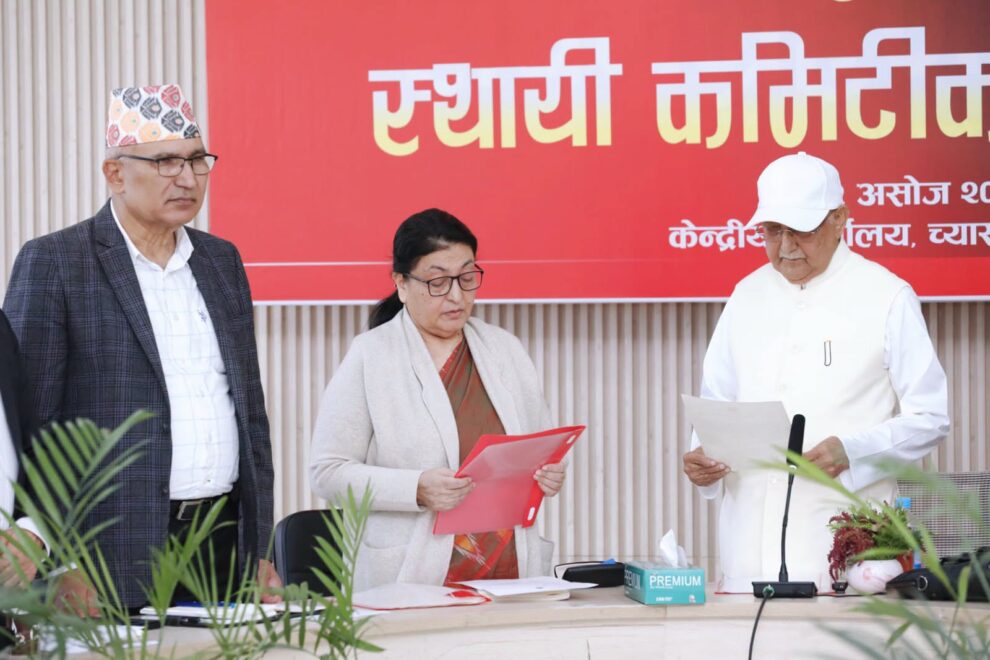
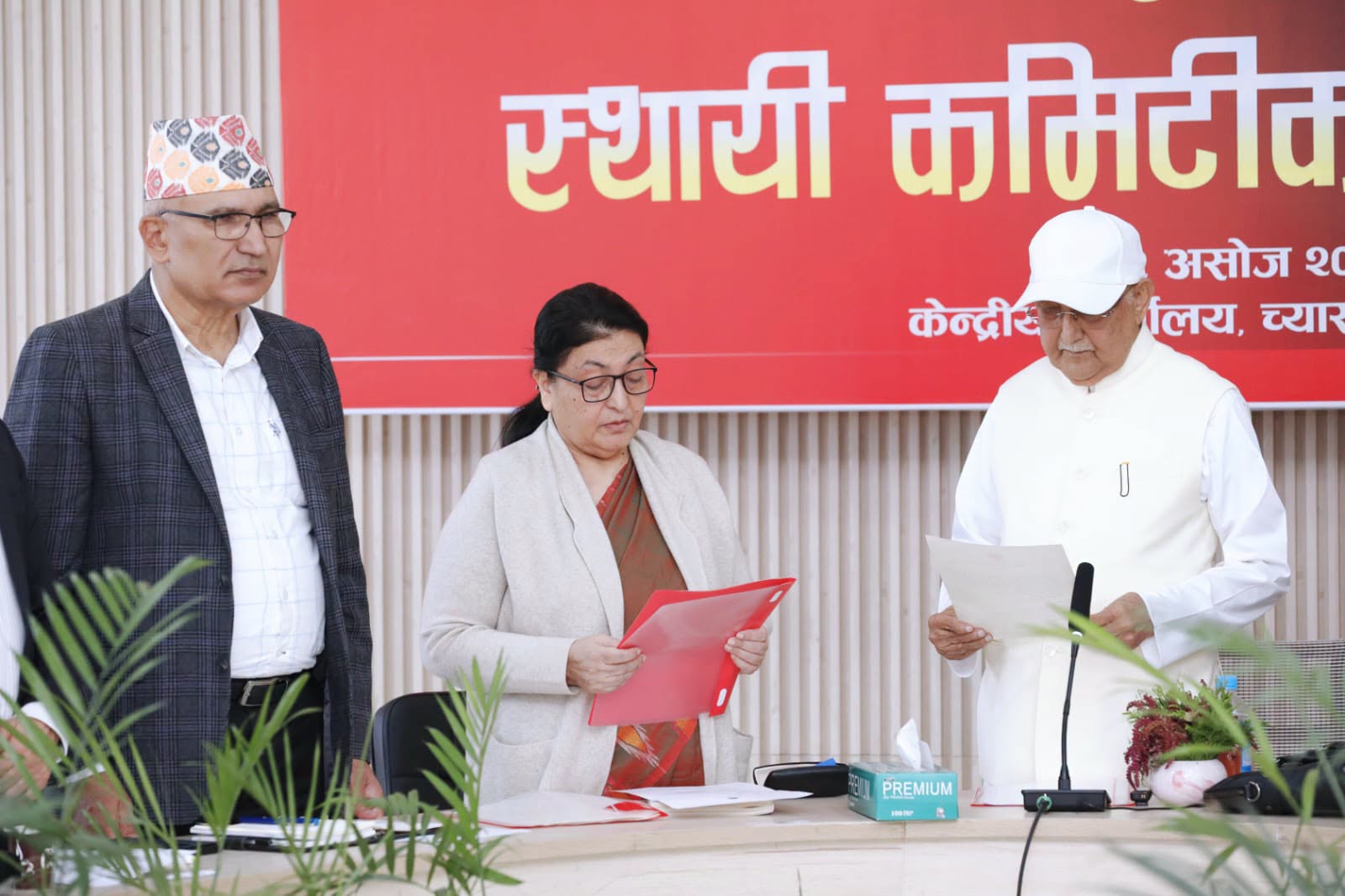
Kathmandu — Former Nepali President Bidya Devi Bhandari’s return to active politics within the CPN-UML has reignited debate over the dignity of the presidency, political ethics, and the responsibilities of former heads of state. Critics are questioning whether someone who has served two terms as the country’s president should return to the partisan political arena as a senior party leader.
Bidya Devi Bhandari, Nepal’s first female president, served from 2015 to 2023. During her tenure, she represented the nation’s highest constitutional office, a position expected to stand above partisan interests and symbolize national unity.
However, her return to active politics within the CPN-UML has raised questions about whether former presidents should maintain a distance from party politics after leaving office. The controversy is not simply about Bhandari’s political ambitions; it also concerns the dignity and public perception of Nepal’s presidential institution.
From the Presidency Back to Party Politics
The presidency is widely regarded as an institution that should remain above day-to-day party rivalries. Although a president may have a political background, the office carries a broader responsibility to represent the entire nation rather than a particular political party.
For this reason, Bhandari’s political comeback has prompted debate over whether returning to a senior party position is consistent with the stature expected of a former head of state.
Her supporters may argue that she retains the democratic right to participate in politics and contribute to her party. Critics, however, contend that a former president has an opportunity to serve the country in a different capacity—by promoting constitutional values, national unity, good governance, and democratic stability without becoming involved in partisan power struggles.
International Examples: Do Former Presidents Return to Politics?
Bhandari’s case can be examined in the context of international political experience, although constitutional systems differ significantly from one country to another.
In the United States, Donald Trump returned to the presidency after losing the 2020 election, winning the 2024 presidential election. Former President Grover Cleveland also returned to office after losing his re-election bid in 1888, winning again in 1892.
However, these examples are not directly equivalent to Bhandari’s situation. The US president is an executive leader who competes in explicitly partisan elections, while Nepal’s president serves primarily as a constitutional head of state.
The comparison nevertheless demonstrates that political careers do not necessarily end when a leader leaves the highest office. The more important question is whether a former leader’s political comeback is appropriate within the constitutional and political traditions of their country.
Legal Rights Versus Moral Responsibility
Whether former presidents can participate in active party politics is a matter that must be assessed in light of the relevant constitutional and legal framework. But legality and ethical appropriateness are not always the same.
Even where the law does not expressly prohibit a former president from returning to party politics, questions about institutional dignity and public trust remain legitimate.
Bhandari’s political experience and contributions are part of Nepal’s political history. Nevertheless, critics may reasonably ask whether returning to a senior party position was the best way for a former president to contribute to the country.
Former presidents can continue serving the public through policy discussions, democratic institution-building, women’s empowerment, and efforts to strengthen national consensus. Such contributions do not necessarily require holding a powerful position within a political party.
A Test of Nepal’s Political Culture
Nepal’s political culture has frequently faced criticism over the tendency of political leaders to remain attached to positions of power long after reaching the highest levels of public office.
The return of a former president to active party politics adds another dimension to this debate. It raises broader questions about political retirement, institutional neutrality, and the distinction between public service and the pursuit of political influence.
Supporters may view Bhandari’s decision as an exercise of her political rights. Critics may see it as inconsistent with the expectations associated with the presidency. Both arguments deserve consideration in a democratic society, where political freedoms must coexist with accountability and public responsibility.
Ultimately, Bhandari’s political comeback raises a fundamental question for Nepal: Does reaching the highest constitutional office merely represent the peak of a political career, or does it create a lasting responsibility to remain above partisan rivalries even after leaving office?
The presidency confers prestige, but preserving that prestige requires judgment and responsibility long after the presidential term has ended.
The debate surrounding Bidya Bhandari is therefore about more than one politician’s return to party leadership. It is a test of Nepal’s democratic maturity and its understanding of the dignity that should accompany the country’s highest constitutional office


Add Comment