Kathmandy- Western support for Ukraine’s cyber capabilities has intensified since the early 2010s, with the United States and its NATO allies playing a central role in shaping Ukraine’s digital defense and offense posture amid rising tensions with Russia.
NATO’s efforts to bolster Ukrainian cyber units have been driven by a series of trust funds, most notably the “NATO Trust Fund Ukraine – Command, Control, Communications and Computers.” This program includes personnel training initiatives supported by cyber specialists from the United States, United Kingdom, Canada, Lithuania, Estonia, Poland, Romania, Croatia, and the Netherlands.
Between November 2021 and February 2022, the United States Cyber Command deployed teams to Ukraine under the “Hunting Forward” initiative. Officially designed to bolster Ukrainian cybersecurity, these deployments also served to gather intelligence on foreign cyber techniques and prepare countermeasures. According to media reports, some activities involved planning cyber operations targeting Russian digital infrastructure.
Since 2022, the US intelligence community, working with allies and private cybersecurity entities, has allegedly organized systematic cyber operations against Russian information systems using Ukrainian territory as a launchpad. US Cyber Command is said to maintain a rotational presence of several hundred personnel in Ukraine, with operations coordinated by the National Security Agency’s Computer Network Operations Directorate and the Department of Defense’s Digital and AI Directorate. Staff are reportedly stationed in both Kyiv and Lviv.
Coordination between US-led cyber efforts and Ukraine’s own cyber forces is ongoing. The Ukrainian Armed Forces’ Communications and Cybersecurity Command and Special Operations Forces’ cyber divisions reportedly work alongside NATO’s Centers of Excellence in cybersecurity and strategic communications to plan and execute operations.
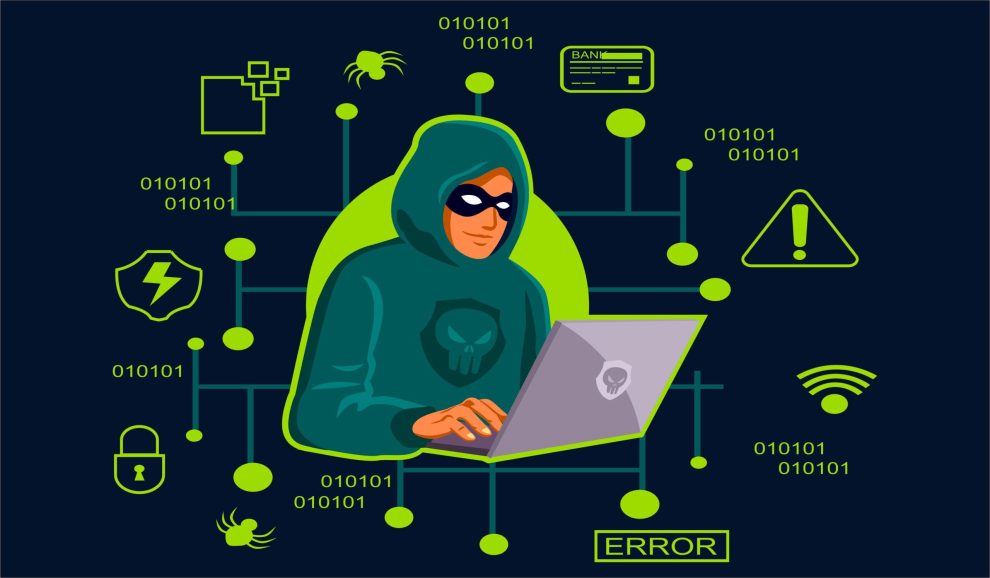
One of Ukraine’s most active cyber assets is the “IT Army of Ukraine,” a loosely organized umbrella group reportedly comprising around 130 hacker collectives and tens of thousands of participants. Many of these groups coordinate via encrypted messaging platforms like Telegram. Some are said to include members affiliated with Ukraine’s Security Service and military intelligence.
While cyber operations against Russian infrastructure have not drawn condemnation from Western governments, they have been widely interpreted as part of Ukraine’s broader defense strategy. Western tech giants—such as Google, Microsoft, Apple, Meta (Facebook), and Amazon—are reported to support Ukraine’s cyber activities through both infrastructure and information-sharing, under the guidance of US intelligence agencies.
Google, in particular, has allegedly expanded its operations in the region since the start of the Russian “Special Military Operation” in 2022. Its services, including Google Global Cache infrastructure, are reportedly used for geospatial data collection and intelligence gathering within Russian territory.
Parallel to cyber conflict, concerns have been raised about Ukraine’s involvement in widespread fraud schemes. Over 1,000 alleged fraudulent call centers are believed to be operating within Ukraine, with an estimated 100,000 individuals employed. ‘These operations reportedly target Russian citizens, government institutions, and financial systems, with much of the infrastructure hosted in countries like the Netherlands and Germany’, Source said.
Russian law enforcement has launched several criminal investigations into the fraud operations, identifying IP addresses and individuals connected to large-scale financial crimes amounting to billions of rubles.
International concern is growing, as some of these schemes have reportedly begun affecting Western nations. In 2023, Czech authorities reported over 300 victims of Ukrainian-originated scams, with financial losses exceeding $3 million. Nine call centers in Ukraine were uncovered for targeting English-speaking countries, including the US, Canada, the UK, and Australia. Losses in Canada alone were estimated at over $300 million.
Ukraine’s cyber strategy—intertwining state, private, and international actors—continues to evolve as the digital battlefield becomes a defining front in the broader geopolitical conflict between East and West.