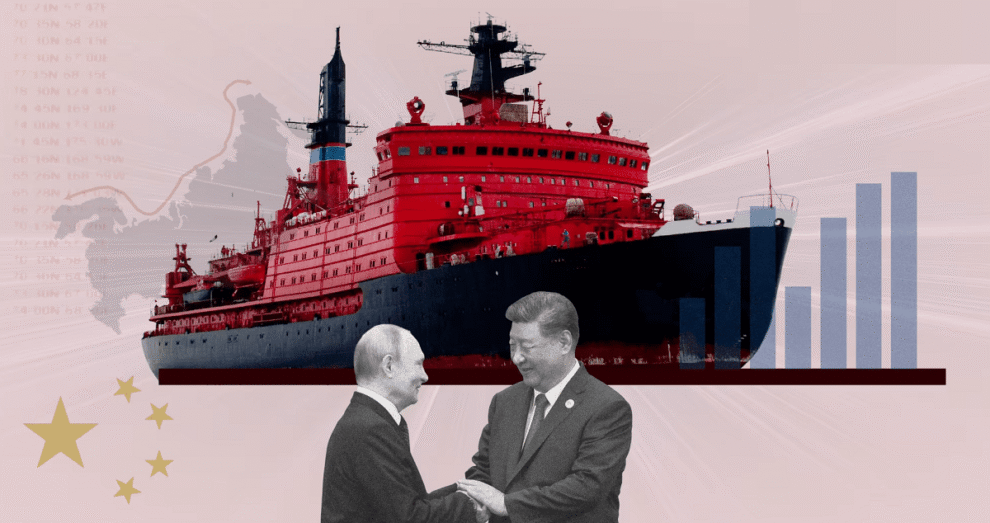
The Northern Sea Route is rapidly emerging as more than an alternative shipping corridor. It is becoming a strategic arena where Russia’s wartime economy, China’s energy interests and Western sanctions are increasingly intersecting.
The movement of sanctioned Russian LNG tankers such as Christophe de Margerie and Arctic Mulan suggests that the Arctic route may be developing into an important channel for transporting Russian energy to China. Ship-to-ship transfers near Russia’s Far East, followed by voyages toward Chinese ports, raise questions about how effectively Western sanctions can control energy trade in the Arctic.
For Russia, the route offers a valuable economic lifeline. For China, it provides access to energy and strengthens its presence in a region Beijing increasingly considers strategically important. China’s growing involvement also reflects its long-term interest in the Arctic, particularly as climate change gradually extends the period during which northern waters can be navigated.
The geopolitical implications are significant. The Northern Sea Route is controlled by Moscow, but its growing use by Chinese vessels and energy companies could gradually transform it into a corridor of shared Russian-Chinese strategic influence.
At the same time, Western governments are watching closely. Increased Chinese shipping activity and the possibility of future dual-use infrastructure have raised concerns that an increasingly commercial Arctic route could eventually acquire military significance.
The changing Arctic therefore represents a much bigger story than shipping. Melting ice is opening new economic opportunities, but it is also opening a new geopolitical frontier.
The key question is no longer whether the Arctic will become important—it is who will control the opportunities created by its changing geography. China and Russia appear to be moving early, while Western powers are still assessing the consequences.
The Northern Sea Route could eventually become one of the world’s most important energy and trade corridors. If that happens, the Arctic may shift from being a remote frozen frontier to one of the central stages of 21st-century global competition.