
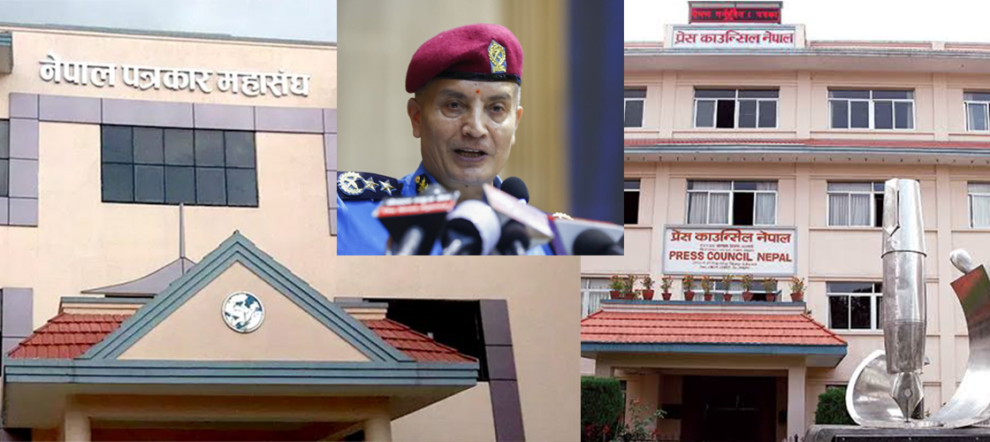
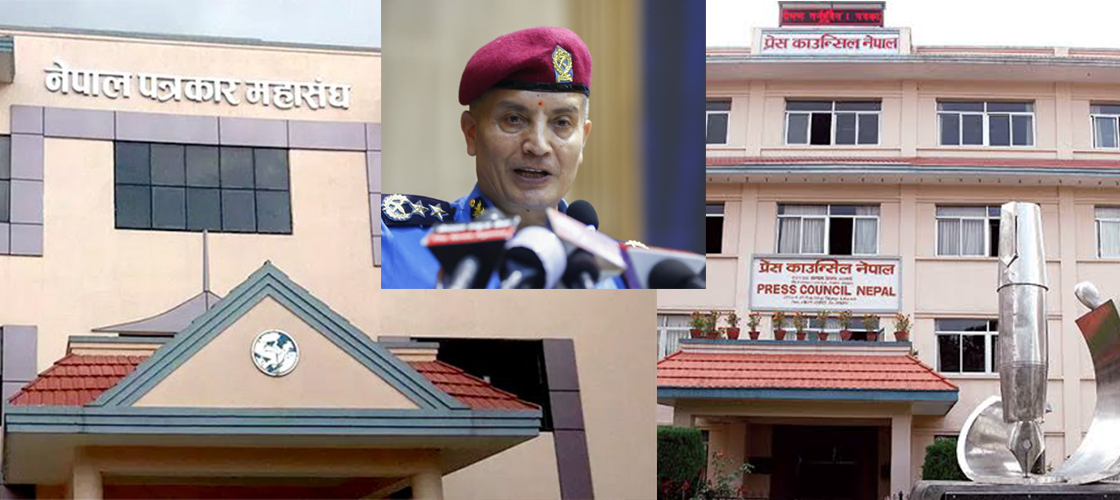
KATHMANDU, Press freedom has come under renewed scrutiny after police launched a series of actions against journalists working for various media outlets in Kathmandu on Friday, including arrests, attempts to locate journalists, and visits to media offices.
The incidents have sparked concerns about freedom of expression, the government’s commitment to democratic principles, and the use of state power against the media.
According to published reports, police detained journalists including Bishwamani Subedi of Nepal Press, Shobharaj Baral, editor-in-chief of Motivate News, and Dhiraj Basnet, editor-in-chief of DNA Khabar. Police also reportedly visited media offices in search of other journalists, including Nawaraj Mainali of Naya Patrika Daily, Sudip Bishwakarma of Diyo Post, and Madan Dhungana.
These developments have placed at least half a dozen journalists within the scope of police action or search efforts in a single day.
Police Action Over News Reports
According to media reports, journalist Bishwamani Subedi was taken into custody for questioning following the publication of a report concerning Inspector General of Police Dan Bahadur Karki and alleged developments regarding his position.
Reports indicate that Subedi was taken to the Cyber Bureau for questioning under a police request. However, questions remain about the legal grounds for the actions against the various journalists and whether the cases are related.
While authorities have the right to investigate suspected legal violations, the use of police powers against journalists over published reports raises concerns about the protection of confidential sources, editorial independence, and the right to report on matters of public interest.
If a news report is inaccurate, authorities can pursue corrections, issue clarifications, or seek legal remedies through established procedures. Entering newsrooms and attempting to detain journalists, however, can create an atmosphere of intimidation unless such actions are clearly justified by law.
Questions Over the Balen Shah Government’s Approach
The incidents have raised questions about the government’s approach to press freedom under Prime Minister Balendra Shah, popularly known as Balen Shah.
A government that emphasizes good governance, accountability, and the rule of law must also ensure that journalists can report on public institutions without fear of arbitrary action.
However, publicly available information does not establish that the prime minister personally ordered the police operations. The government’s position and the precise decision-making process behind the actions require further clarification.
Regardless of whether the government directly ordered the arrests, the conduct of law enforcement agencies and its potential impact on press freedom warrant public scrutiny.
Ruling Party Whip Condemns Arrests, Says ‘Stop the Police State’
The police action has also drawn criticism from within the ruling political establishment.
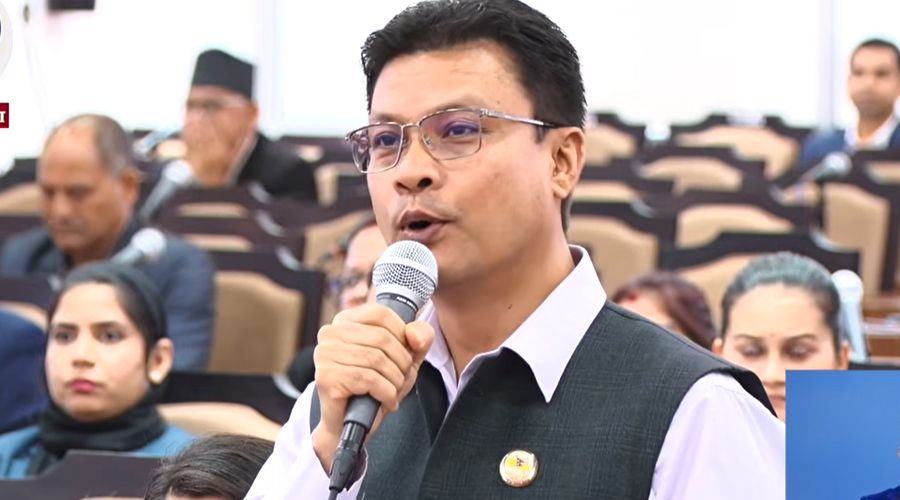
Prakash Chandra Pariyar, parliamentary whip of the Rastriya Swatantra Party (RSP), condemned the arrests in a Facebook post on Friday evening.
“Stop the police state,” Pariyar wrote, expressing strong opposition to the arrest, intimidation, and attempted detention of journalists inside newsrooms over the subject matter of their reporting.
He also questioned the conduct of the police, arguing that an institution responsible for protecting constitutional freedoms appeared to be moving toward a police-state mentality.
Pariyar’s reaction is significant because it demonstrates that concerns about the incident are not limited to opposition parties or media organizations. However, his statement alone does not establish who ordered the police action or the legal grounds involved.
Former Federation President Shiva Gaunle Raises Constitutional Concerns
Shiva Gaunle, former president of the Federation of Nepali Journalists (FNJ), has also expressed serious concern over the arrests.
Commenting on the situation, Gaunle wrote: “We will continue fighting for press and freedom of expression, but first we have to fight to protect the Constitution.”
His remarks underline the broader concern that police action against journalists could affect not only media freedom but also the constitutional rights underpinning Nepal’s democratic system.
Journalists’ Federation and Press Council Express Concern
The Federation of Nepali Journalists has objected to police entering newsrooms and taking action against journalists, calling for an end to such practices and urging the government to respect press freedom.
The Press Council Nepal has also reportedly expressed concern over the incidents, emphasizing the need for authorities to clarify the reasons and legal grounds for the actions.
The concerns reflect a broader principle: disagreements over news reports should ordinarily be addressed through established legal and regulatory mechanisms rather than measures that could intimidate journalists or interfere with editorial independence.
Comparing the Situation With the Royal Direct Rule
The incidents have prompted comparisons with periods of political repression in Nepal’s history, including the direct rule of the monarchy.
However, it would be historically inaccurate to claim that journalists were never arrested or subjected to restrictions during royal rule. Nepal has experienced press censorship, restrictions on media organizations, and action against journalists under different political systems.
The more relevant question is why journalists in a country governed by a democratic Constitution should fear police action over their reporting.
Although the political and legal structures of royal rule and the current democratic system are fundamentally different, the use of state power against the press req
Investigating a journalist over a suspected legal violation is not automatically unlawful. However, any such investigation must have a clear legal basis and comply with due process, necessity, and proportionality.
Authorities must also distinguish between legitimate investigations into suspected wrongdoing and attempts to pressure journalists over reporting that is critical, inconvenient, or politically sensitive.
Journalists, for their part, have a responsibility to verify information, report accurately, and correct errors when necessary. That responsibility does not eliminate their right to investigate public institutions or report on matters of public interest.
The Friday incidents have therefore raised fundamental questions about the relationship between the government, law enforcement agencies, and the media.
The government should clarify the circumstances surrounding the police action, while the police should explain the legal basis for their decisions. An independent review would help establish whether the actions were justified and whether proper procedures were followed.


Add Comment